Death Valley Natural History Association August E-Newsletter

DVNHA
Join the Telescope Caption Contest

Help us caption this comic! Have a clever, funny, or inspiring idea for what these characters might be thinking or saying? Enter our contest and share your best idea! The winning entry will be featured in the next issue of the Telescope and on social media.
Death Valley NP
Seiche Affects Devils Hole
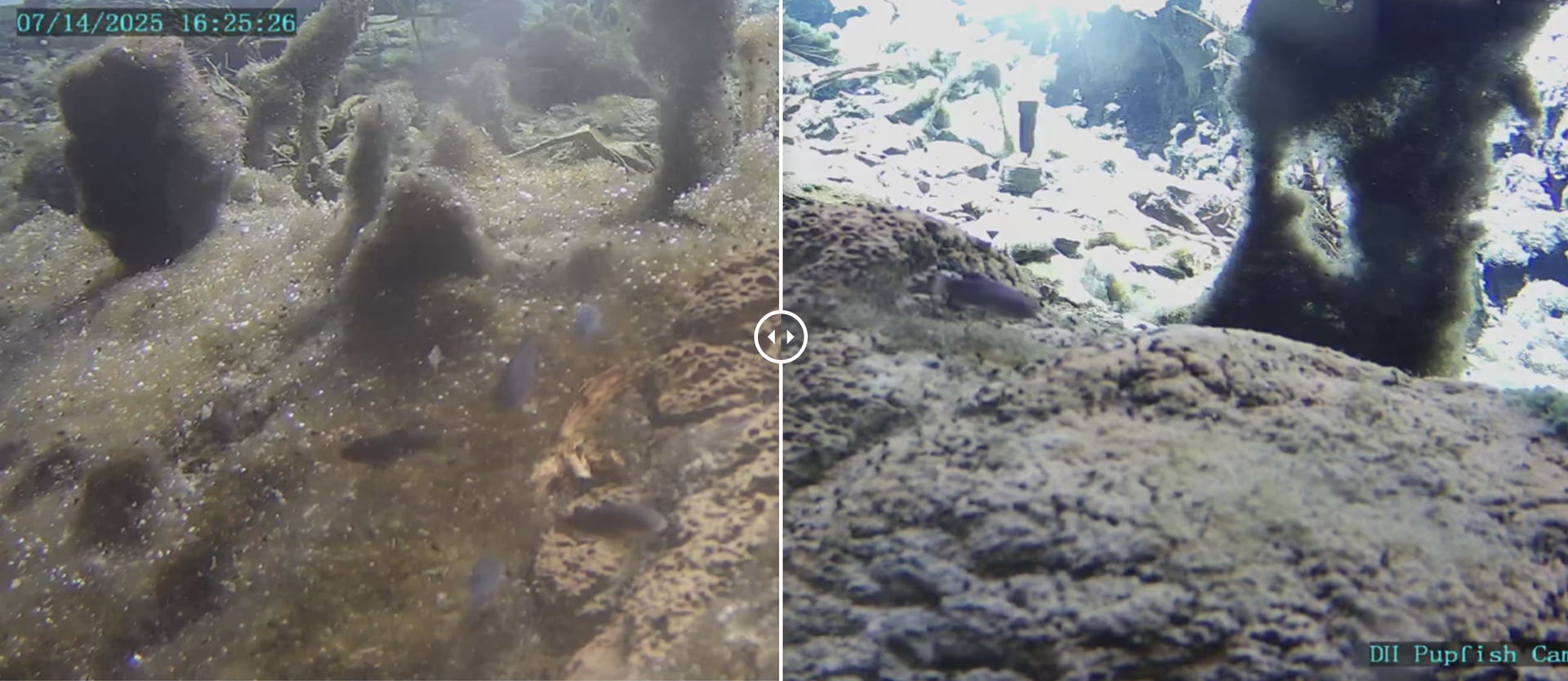
On July 29, just 21 minutes after a magnitude 8.8 earthquake struck Russia’s Kamchatka Peninsula, waves reached Devils Hole nearly 4,000 miles away. Earlier earthquakes in December and February had generated larger waves that stripped most algae and invertebrates from the shallow shelf, leaving only 38 Devils Hole pupfish in the spring count. The Kamchatka quake had a more distant epicenter, and its 10-inch waves were smaller, removing only part of the shelf’s materials. With strong summer sunlight driving rapid algae growth, food resources are expected to recover quickly. Biologists remain optimistic because pupfish often increase spawning after disturbances, offering hope for the population’s rebound.
Mapping Death Valley NP’s Vegetation
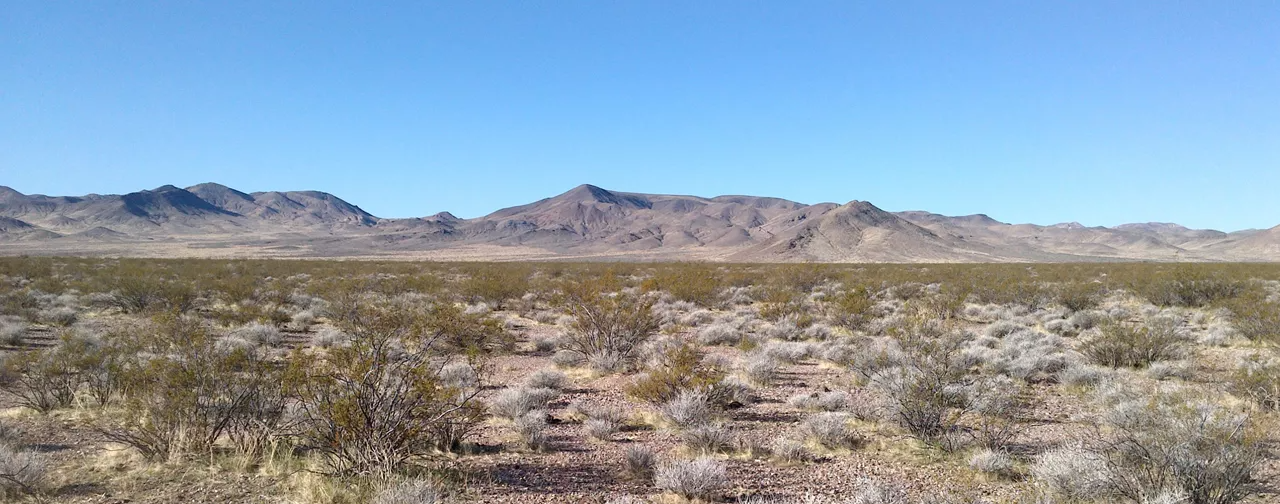
Death Valley NP may seem barren at first glance, but it actually contains over 2,000 documented plant species that support a rich variety of wildlife. To better understand and protect this diversity, the National Park Service and partners completed a decade-long project to classify and map the park’s plant communities. Scientists grouped observations into 85 “plant alliances” and 186 “plant associations,” revealing how vegetation adapts and organizes within the desert’s extreme conditions.
The maps show that “shrubland communities” cover about 70 percent of the park, with nearly half of that area dominated by creosote bush (“Larrea tridentata”) associations that play an important role in the ecosystem. Park managers now use these maps to track changes, combat invasive species, monitor wildfire recovery, and link vegetation data with climate models to prepare for future challenges. Read more here.
Ash Meadows NWR
Explore Nevada’s Rugged Past

In the late 1800s, Jack Longstreet was one of many who came to Ash Meadows, drawn by the promise of water in the desert. A prospector, rancher, gambler, and gunman, he built a stone cabin near the springs in the 1890s and made a life in this oasis. More than a century later, the cabin still stands, offering a glimpse into Nevada’s frontier past. Visitors today can step inside, explore the stone walls, and picture the challenges of living in such a remote place. It remains a landmark that connects history with the landscape, ready for you to experience on your next visit to Ash Meadows National Wildlife Refuge!
DVNHA Store
Product Highlight

Celebrate one of the most iconic symbols of our national parks with the Park Ranger Crochet Kit! Park rangers are at the heart of every national park experience. Whether helping visitors or working behind the scenes, rangers ensure our parks remain safe, welcoming, and inspiring. Whether crafted for yourself or given as a thoughtful gift, the finished ranger is a simple way to carry the spirit of our national parks home with you!
Death Valley Natural History Association | dvnha.org
Education ● Preservation ●
Mission
Preserving and interpreting the natural and cultural resources of the Death Valley region in cooperation with our government partners:
Death Valley National Park and Ash Meadows National Wildlife Refuge
Discover more from Eastern Sierra Now | Local News
Subscribe to get the latest posts sent to your email.