Beyond the Beyond: Unlocking the Mind’s Eye — A Closer Look at Remote Viewing, Part 1

Beyond the Beyond: Unlocking the Mind’s Eye — A Closer Look at Remote Viewing, Part 1

What if I told you that you could see across the world with your eyes closed? That you could peek into a locked box and see the documents therein, or gaze upon the dark side of the moon from your living room. Would you call me crazy?
In the 1950s and ’60s, when the Cold War was heating up and the U.S. was looking for every possible advantage it could get against Russia, we tried just about everything under the sun. The CIA created psychological warfare like cultural propaganda, highlighting the perceived failures of communism and the Soviet system. Operation Mockingbird was CIA-funded and created anti-Soviet propaganda that painted Russia in a negative light using American journalists. Some say that the recruitment of journalists to further state narratives still happens today.
The U.S. engaged in espionage using spy satellites and U-2 spy planes. They created elaborate spy networks and “stay-behind” armies in European countries in case of a Soviet invasion.
Stealth technology, missile defense systems, trade embargoes, oil price manipulation—the list goes on and on. But there were also projects that were more on the… let’s just say, experimental side.
MK Ultra (which we’ve talked about before), Operation Paperclip (the recruitment of Nazi scientists after the end of World War II), exploding cigarettes, Operation Acoustic Kitty (surgically implanting listening devices inside cats to use them as covert surveillance agents), and something called remote viewing. And yes, all of these were real projects.
Remote viewing is the practice of perceiving information about a distant—or sometimes close yet unseen—target through extrasensory perception, or ESP. It is a form of mental exploration, where the mind can transcend barriers to access hidden locations, objects, or events. These could be objects buried far underground or those on the other side of the world.
Project Stargate is perhaps the most well-known of the remote viewing programs. Though it officially started in 1972, its origins date back decades earlier, when the government first expressed interest in psychic phenomena.
Through gathered intelligence, there was some evidence that the Soviet Union was conducting programs related to psychic phenomena. Not to be edged out by the big, snarling, and perhaps telepathic bear, the U.S. began conducting its own research into said phenomena with Project Grill Flame, under the U.S. Army Intelligence and Security Command (INSCOM). This was the first stage of what would become Stargate, with the Army exploring the potential of remote viewing for military intelligence. It was later renamed Project Center Lane, and then Scanate, which looked at practical efforts to use psychics for espionage.
In the early 1980s, Project Stargate was born out of these programs and involved more rigorous training and testing to further develop psychics and their capabilities.
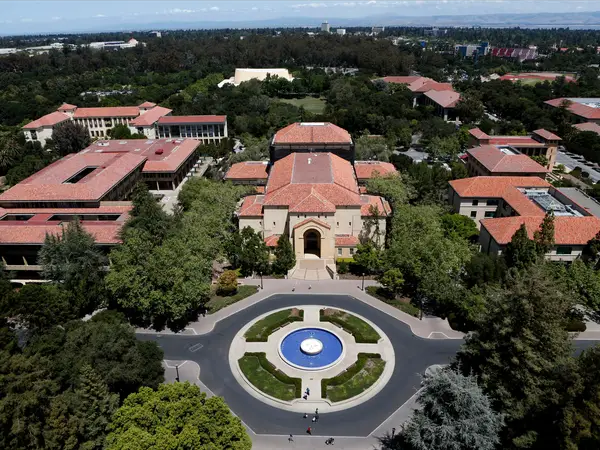
In 1983, the project was transferred to SRI International (Stanford Research Institute) in California, where additional remote viewing experiments took place, overseen by parapsychologists.
One of the key remote viewers of Project Stargate was a man named Ingo Swann. He was a self-proclaimed artist and psychic and was brought into the project very early on. Swann is often credited with creating a core methodology for remote viewing—a sort of how-to guide for incoming recruits. He also had many successful remote viewing sessions. These include:
- Describing Jupiter’s ring system long before any such discovery was made
- The remote viewing of a Russian base, with precise details that were later verified by satellite imagery
- The remote viewing of an earthquake before it actually occurred
- And many more
Swann’s remote viewing sessions were revolutionary, not only due to their accuracy but because they seemed to showcase the vast potential of the human mind and its ability to access information beyond the ordinary senses. While some of his results remain debated and unverified, many still consider his contributions crucial in furthering the study of human consciousness.
More in Part 2…
Have you ever attempted to remote view? Message @beyondthebeyond1 on Instagram
Disclaimer: The views and opinions expressed in this article are solely those of the author and do not necessarily reflect the official policy or position of Eastern Sierra Now. Readers are encouraged to conduct further research and consult with relevant experts or professionals before making any decisions or taking any actions based on the information provided in this article.
–
Catch up on more “Beyond the Beyond” here.
Discover more from Eastern Sierra Now | Local News
Subscribe to get the latest posts sent to your email.