
Brought to you by

Backcountry Avalanche Forecast
Issued
Friday, January 2, 2026 – 7:00AM
Author
Clancy Nelson
 Eastside Region
 Eastside Region
Bottom Line
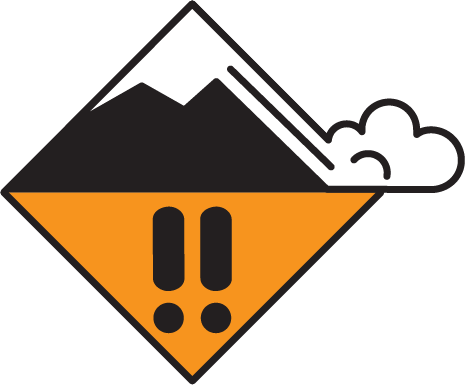
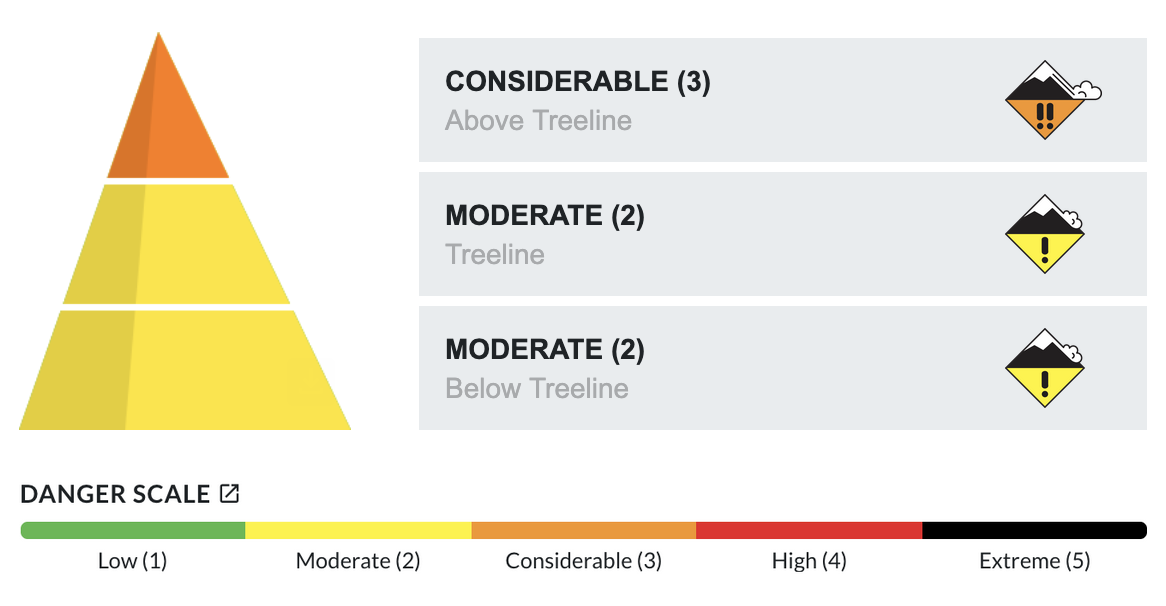
You can trigger avalanches big enough to bury you on wind-loaded slopes below ridges and in chutes. You’re more likely to get into trouble at higher elevations and on open, downwind slopes near Mammoth. A wind slab avalanche could step down to trigger weak layers deep in the snowpack. Sheltered terrain is a safer bet.
Avalanche Problem #1
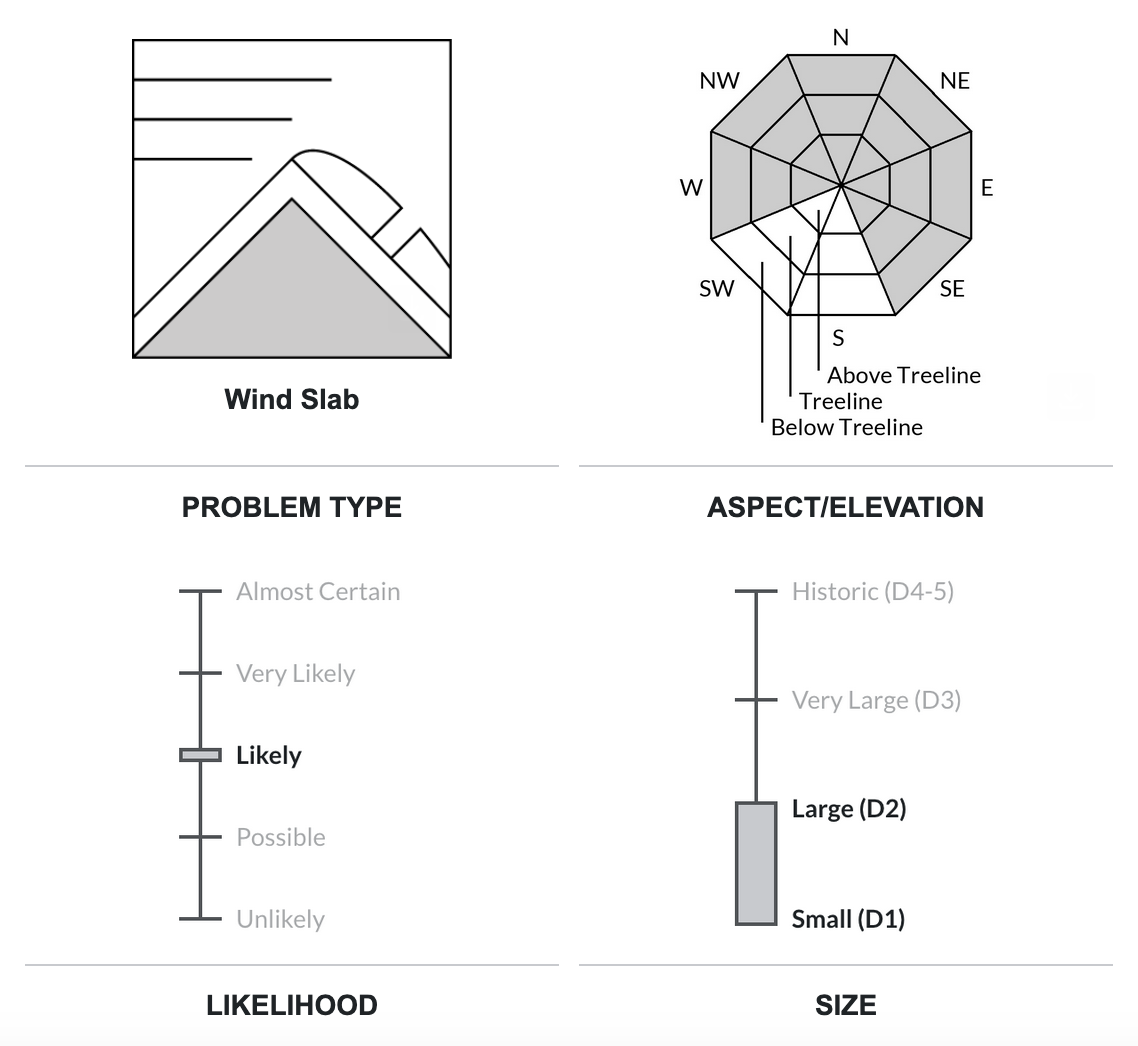
You should be suspicious of any slope with wind-rippled texture. Steep slopes below cornices and in gullies will be problem spots. Most of the new snow fell at higher elevations and in the Mammoth area, where recently formed wind slabs will be larger, more widespread, and more sensitive. Triggering a smaller wind slab avalanche remains possible near or below treeline. Recent natural avalanches and shooting cracks in dense snow beneath your feet are warning signs to step back. Seek sheltered slopes with no exposure to wind-loaded terrain above you. As you’re considering your options, keep in mind that a smaller wind slab avalanche could be enough to trigger an unsurvivable slide that breaks on weak layers buried deep in the snowpack.

Avalanche Problem #2
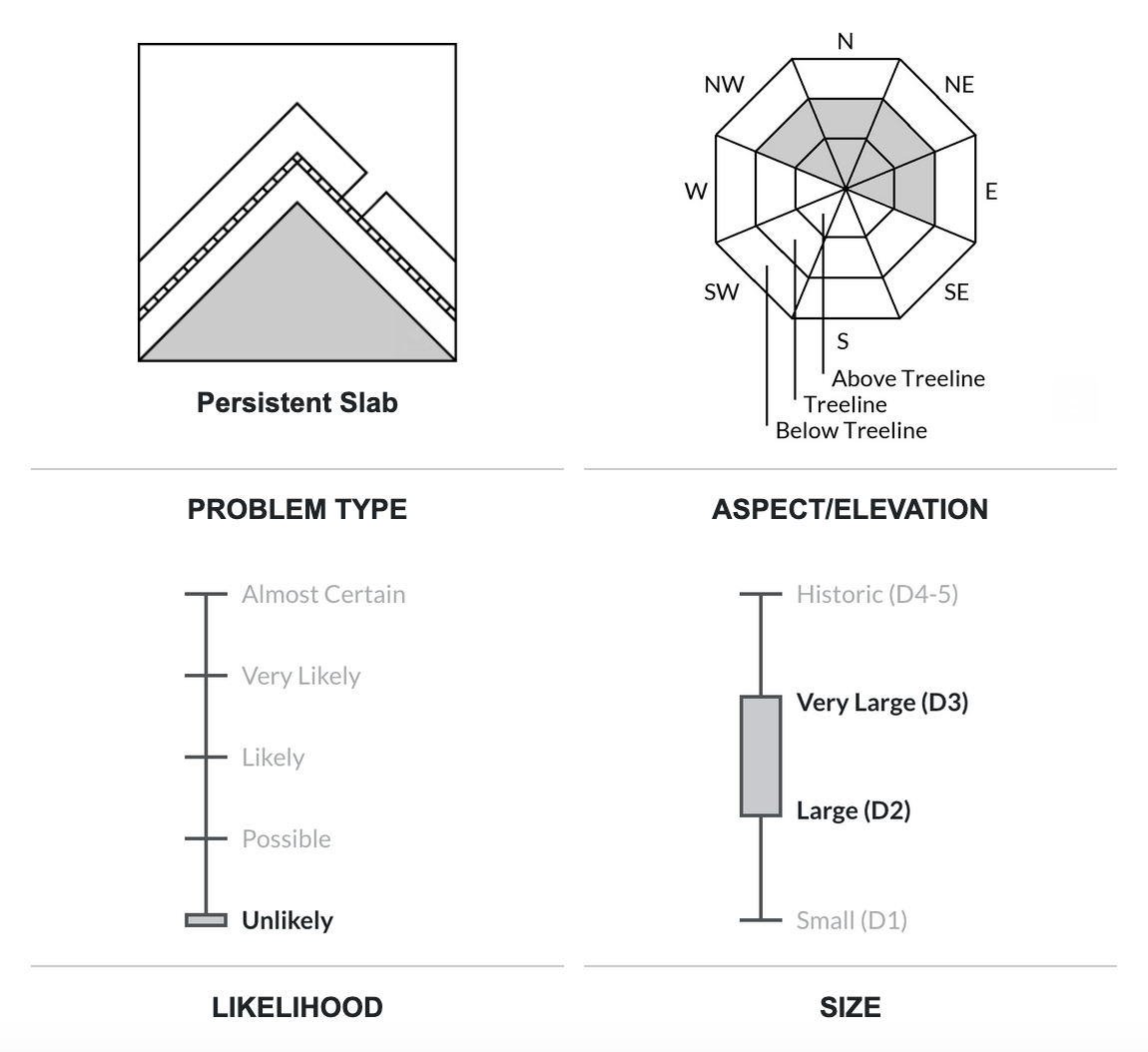
Our current persistent slab avalanche problem falls in the low-likelihood, high-consequence category. It’s unlikely that a human will be able to affect the old, rotten snow now buried 2 to 3+ feet down. However, new and drifted snow quickly loaded the same slopes that have a concerning snowpack structure yesterday.
This is a complex problem. You might not get feedback like collapses or shooting cracks until, boom: an avalanche. The only real way to limit exposure to this problem is to avoid steep slopes where old snow is buried. Persistent slab avalanches can be triggered remotely from adjacent slopes and from flat terrain below. A smaller wind slab avalanche could be just enough load to trigger deeper weak layers. If triggered, they can propagate across and around terrain features that would otherwise confine new snow instabilities. Factor the possibility of an unsurvivable avalanche into your plans and increase your margin for error.

Forecast Discussion
Multiple size one wind slab avalanches were reported at all elevations in Mammoth and June yesterday, as strong southwest winds drifted up to 10 inches of new snow onto leeward slopes. These avalanches failed on a crust at the new/old snow interface after precipitation changed from rain to snow.
Winds continue throughout the day, increasing tonight. Even as skies clear and temperatures climb above freezing, we expect the cooling effects of the wind to keep wet snow avalanches at bay. That could change if you see the surface getting wet and rollerballs on very steep, sheltered slopes this afternoon. You can move to shady aspects to limit your exposure.
A stronger winter storm moves in tonight, and we expect the avalanche hazard to increase significantly through the weekend.
Mountain Weather
Issued
Friday, January 2, 2026 – 7:00AM
Author
Clancy Nelson
The National Weather Service in Reno has issued a Winter Storm Warning for our area effective from midnight tonight to 10 am on Monday.
Today is a break with mostly clear skies, warming temperatures, but continued strong winds. Storm totals from New Year’s Day topped out at around 10 inches of new snow, with over 1.5 inches of snow water equivalent, in a short period. North and south of Mammoth, the storm waited until mid-morning to transition from rain to snow. Winds have been strong to extreme out of the southwest, and that will continue today and through the weekend.
A stronger Pacific storm moves in overnight, bringing feet of snow to Mammoth and the Sierra Crest by Saturday night. Elsewhere, snowfall is expected to be between 10 and 15 inches during the same period. The storm continues Sunday and wanes by early Monday morning.
This information is provided by the Eastern Sierra Avalanche Center and describes general backcountry avalanche hazard and conditions. It does not apply to ski areas and highways where avalanche mitigation is conducted.
Discover more from Eastern Sierra Now | Local News
Subscribe to get the latest posts sent to your email.