Brought to you by

Backcountry Avalanche Forecast
Issued
Tuesday, December 30, 2025 – 7:00AM
Author
Greg Cunningham
 Eastside Region
 Eastside Region
Bottom Line
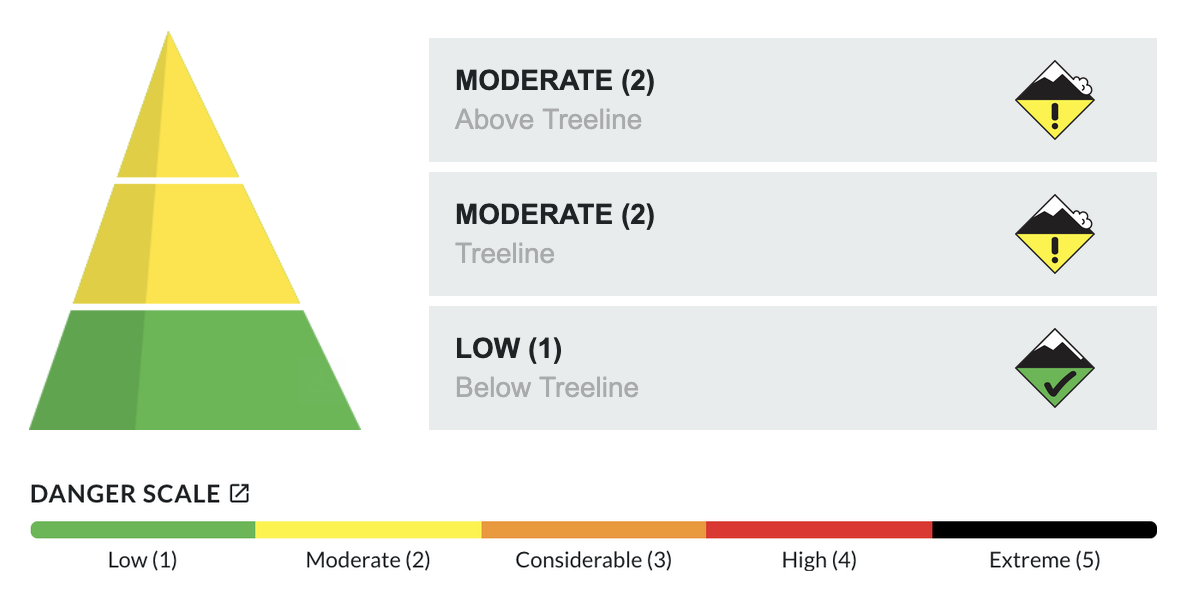
Recent northeast winds and available snow have created small to medium-sized wind slabs above treeline on leeward slopes and gully features. Recent avalanches, cornices, and surface cracking in fresh drifts are all indicators of wind-slab instability. Although unlikely, a large, persistent slab avalanche is possible where old snow survived the early December high-pressure period.
Avalanche Problem #1
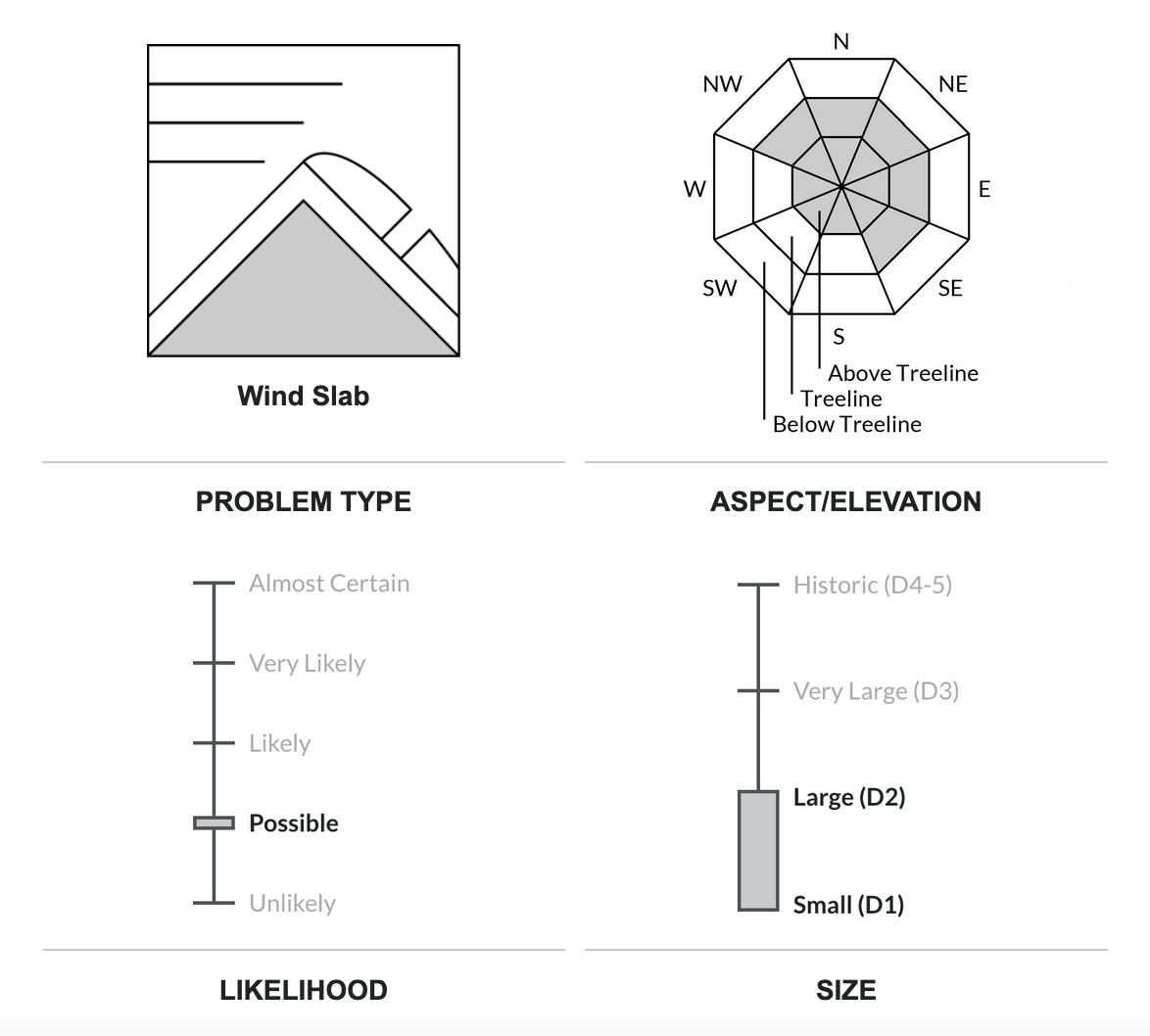
Moderate to strong northeast winds moved snow around above treeline yesterday and overnight. Today, the winds are switching to the south and becoming light to moderate in speed. There is a lot of snow available to blow around, and it will be possible to find and trigger a wind slab on all aspects above treeline today. Where old snow exists, a wind slab avalanche may be a large enough load to trigger a deeper, persistent slab avalanche. Recent surface avalanches, cornices, drifted snow and cracks underfoot are all indicators that you may have found the wind slab instability. You can avoid the wind slab hazard today by keeping your adventures in sheltered areas near and below treeline.

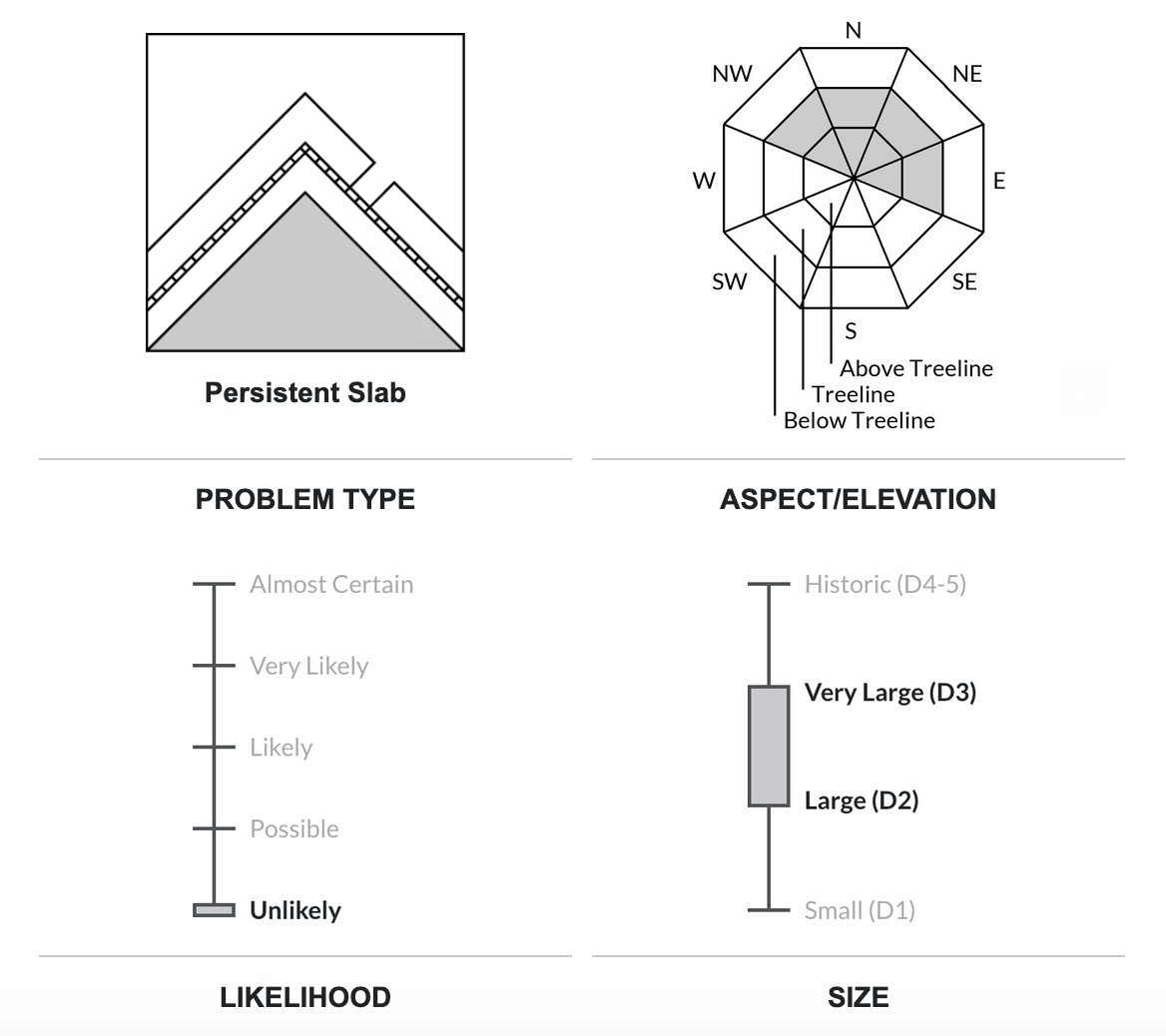
Where old snow survived through December and has now been buried, a persistent slab avalanche may be possible. This is a low-likelihood, high-consequence scenario. Buried deeper than 3 feet in many locations, these layers are difficult for a human to impact, but a resulting avalanche would be large to very large. This setup was responsible for several D3 (very large) human-triggered avalanches earlier this week in the Sonora Pass area to our north. In our region, there is evidence of a persistent slab cycle that occurred during the peak of the Christmas storm period, and more isolated avalanches have been triggered in the days since.
We’ve observed this poor snowpack structure on east, north, and northwest aspects above 9500 feet, and possibly lower near the Sierra Crest. South of Mammoth, observations show that elevation bands for this problem may be slightly higher. In the northern half of the forecast area, you can identify the presence of the old snow with your probe as it is capped by noticeable rain crust up to 11000 feet. This crust is less obvious as you move further to the south. To be certain, you will have to find representative terrain and dig a deep hole.
This is a difficult problem to manage, as one will often not receive feedback or signs of instability prior to an avalanche. The only real way to limit exposure to this problem is to avoid slopes where old snow is buried. Remember that persistent slab avalanches can be remotely triggered from adjacent slopes and from flat terrain below a steep slope. If triggered, they can propagate across and around terrain features that would otherwise confine new snow instabilities.
Build wide safety margins into your tour plan, use conservative terrain choices, and careful route finding to limit exposure.

The weak layers at the base of the snowpack vary by elevation. Sugary facets and facet-crust combos are buried 3+ feet deep in the northern part of the forecast area as you move towards the Sierra crest and are more shallowly buried in the southern part of the forecast area. Areas in the high alpine were less affected by rain. However, old snow surfaces were heavily wind-affected, and coverage was more sporadic before our recent storms.
There is considerable overlap between the wind slab and persistent slab avalanche problems. Although it is unlikely for a human to trigger a persistent slab directly, a larger load like a snowmobile or wind slab avalanche may be enough to overload the poor structure and trigger a very large avalanche. Persistent slabs are unpredictable and difficult to manage. The only certain strategy is to avoid slopes steep enough to slide and connected adjacent slopes. A stubborn persistent slab problem is a good reason to widen your typical safety margins.
As we move into another period of unsettled weather, it will be important to consider how the new snow load may affect the buried weak layers.
Mountain Weather
Issued
Tuesday, December 30, 2025 – 7:00AM
Author
Greg Cunningham
Today will start the transition away from a period of stable weather. Blustery northeast ridgetop winds will ease and switch to the south, sky cover will increase throughout the day, and cold morning temperatures will give way to highs near 40 degrees in Sierra valley locations. By tomorrow, skies will be cloudy, and we can expect precipitation by midday with snow levels above 9,500 feet. The weather is forecasted to remain unsettled for several days.
This information is provided by the Eastern Sierra Avalanche Center and describes general backcountry avalanche hazard and conditions. It does not apply to ski areas and highways where avalanche mitigation is conducted.
Discover more from Eastern Sierra Now | Local News
Subscribe to get the latest posts sent to your email.