





Beyond the Beyond: Whitley Strieber
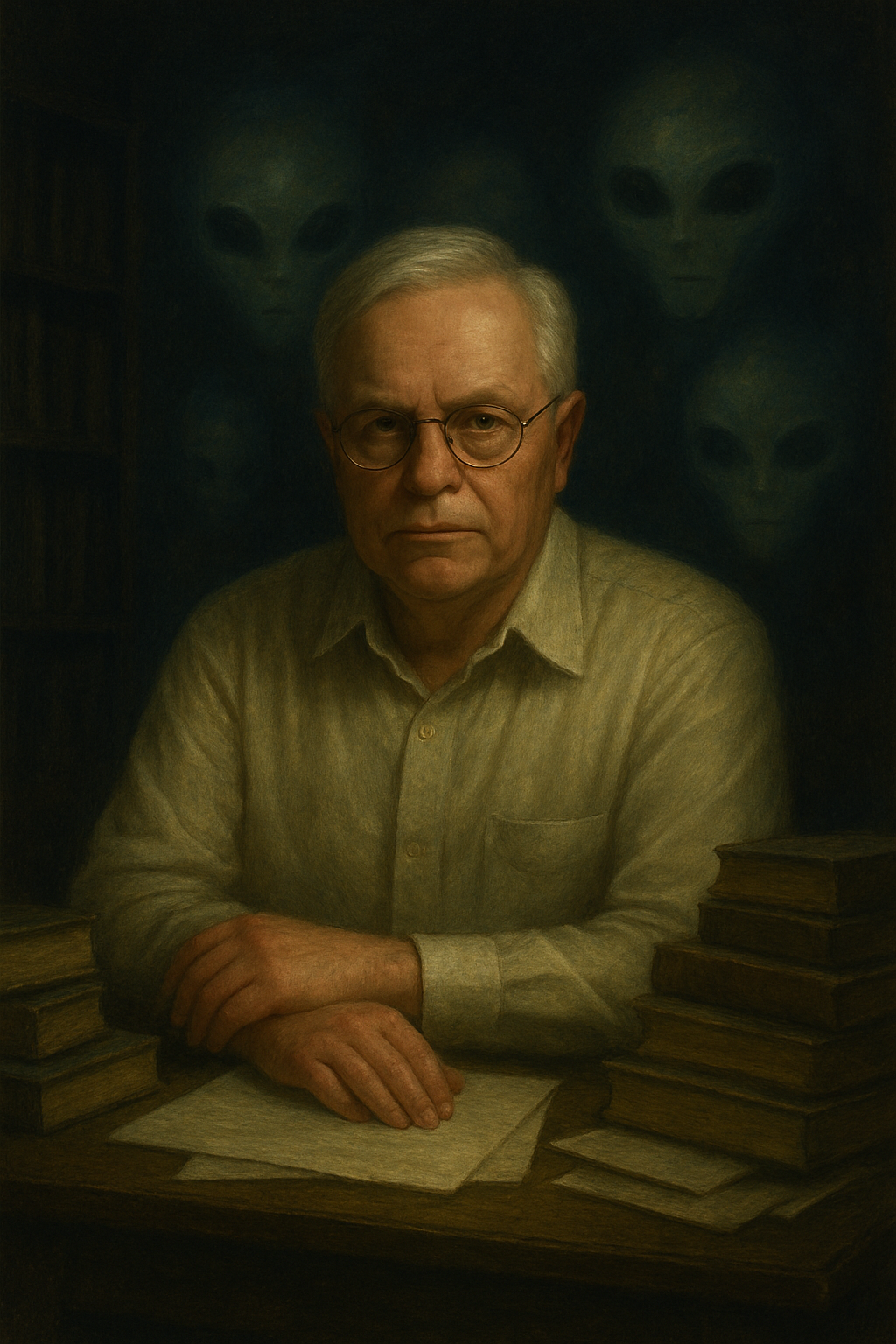
In the 1980s, Whitley Strieber’s book Communion was everywhere. In bookshops and grocery stores, the haunting gray face and black eyes of the alien gray that graced the cover seemed to follow you as you passed by. There was something unnerving about it and, as some would later say, familiar. I didn’t know anything about the phenomenon then. I had yet to have my own UFO sighting, which would happen the following year on the shores of Lake Utica in the Stanislaus National Forest. But I remember seeing movies when I was younger about aliens and being told some people believe that extraterrestrials exist — that they weren’t the product of fantasy but were visiting Earth in nuts-and-bolts craft.
I was at a friend’s house and there was something on TV about Communion: how it was a bestseller, and all the fanfare its author, Whitley Strieber, was getting. My friend’s mom came into the room, and I asked her if she thought the guy was telling the truth. She dismissed the whole thing immediately, saying the odds of a bestselling author having a hit book about aliens seemed a little too convenient to her. But that wasn’t the stance I took, even at that young age when everything adults say is supposed to be gospel. The “I wonder if…” part of the child’s brain trumped the part that was supposed to fall in line.
I read Communion as a teen and its follow-up, Transformation: The Breakthrough, and though I wasn’t necessarily a believer, I found the whole thing intriguing. Whitley’s journey began as a successful novelist of suspense and horror, but his life was turned upside down when he claimed to have been abducted by mysterious beings in the mid-1980s. The events and the subsequent book thrust him into the center of the UFO debate, and ever since he has walked a strange path between respected author and controversial experiencer, insisting his encounters were real despite widespread skepticism. The book also helped popularize the supposed abduction phenomenon and exposed millions — and maybe more — to the image of the gray alien. Yes, Spielberg did something similar in his film Close Encounters of the Third Kind, but Strieber’s story was different — it wasn’t framed as entertainment. It was presented as raw testimony, unsettling at times, and gave the topic a cultural weight that blurred the line between fiction and reality.
On December 26, 1985, Strieber and his family were spending the holidays at their secluded cabin in the woods in upstate New York. An unusual noise he described as a “whooshing” or “whirring” noise woke him in the middle of the night, and he found himself unable to move. He recounted that during his first encounter he saw several strange entities in the room with him. Among them was a small, stocky being with wrinkled skin, dark eyes, and a “troll-like” appearance. He also described tall, thin figures with slanted black eyes, resembling what would later become widely known as “Grays.” Alongside these were shorter, more mechanical or robotic-seeming beings who acted as assistants to the others.
In the aftermath, Strieber sought hypnosis with Dr. Donald F. Klein to draw out further fragments of that night, bringing forth images of odd procedures, unfamiliar devices, and a haunting impression that something had interfered with the core of his very being. Whether these recollections were genuine memories, dreamlike fabrications, or something altogether different is still contested by many. What remains certain is how profoundly the incident affected him and how he was able to put that turmoil into words.
Communion was a story about intrusion — into the body and into the home, and perhaps into the zeitgeist, making the story of alien abduction a household topic in a way it never had been before. For some, it was an undeniable fabrication from a well-known author paid to do that sort of thing for a living. For others, it was a glimpse into the unknown, pushing a conversation out from the shadows and into their living rooms.
Strieber has gone on to have a controversial and lengthy career speaking about this topic at length. He has continued the abduction narrative with books like The Secret School (1996) and has blended UFO themes with environmental, spiritual, and apocalyptic concerns. He’s claimed ongoing contact with what he terms “The Visitors” in later writings and has a podcast called Dreamland that has been produced for more than twenty years.
He’s still at it and remains a controversial figure within the UFO community. Whether an experiencer or a man with an overactive imagination who has found a way to make quite a bit of money writing about beings from somewhere else, Strieber cracked open something in our culture that wasn’t there before. For good or bad, he popularized the alien abduction story. Perhaps whatever these things are, they used him to acclimate the public to their presence. Maybe, because he was a writer with a wide reach, they used him as a conduit — a familiar voice and a bestselling book that slipped ideas into the mainstream to expand the world’s field of perception. Culture-shaping. But who benefits?
Have you had a sighting? Message @beyondthebeyond1 on Instagram.
Disclaimer: The views and opinions expressed in this article are solely those of the author and do not necessarily reflect the official policy or position of Eastern Sierra Now. Readers are encouraged to conduct further research and consult with relevant experts or professionals before making any decisions or taking any actions based on the information provided in this article.
–
Catch up on more “Beyond the Beyond” here.
Discover more from Eastern Sierra Now | Local News
Subscribe to get the latest posts sent to your email.


