Spotlight On: Wild Iris
As part of our ongoing series, we are interviewing people of interest in the area who are having a positive impact on our community.
This time, we reached out to Dominic Hays, Executive Director of Wild Iris in Bishop, CA.

How has Wild Iris’s role evolved since its founding in 1981, and what are some of the most significant changes you’ve seen over the decades?
Over the last 44 years, Wild Iris has done a lot of growing to meet the changing and increasing needs of our community. Our services started with, and continue to center around, crisis intervention services for survivors of sexual and domestic violence, but our understanding of who is affected by these issues and how to best help has changed. In 2002, we shortened our name from Wild Iris Women’s Services to Wild Iris to be more inclusive toward male survivors of sexual and domestic violence. We opened CASA of the Eastern Sierra in 2012 to provide specially trained volunteer advocates to children in the foster care system in Inyo and Mono Counties, a service that did not previously exist in our community. In 2014, we launched our Transitional Housing program, which continues to house 10-14 families escaping violence each year. In 2020, we integrated virtual services so that we could keep serving our community during the Covid shutdown, and we found that we were able to serve significantly more survivors through these diverse access methods.

Can you walk me through a day in the life of someone working at Wild Iris — for example, how your crisis hotline, advocacy, and counseling services coordinate to support someone in need?
Our advocates are in constant communication with each other during and between their shifts to ensure that clients’ needs are met. We start every weekday with a morning meeting to distribute appointments and logistically plan which advocates will be doing what throughout the day. We never know what will be on the other end of the phone line when it rings, so close coordination and communication is crucial for our team to be able to respond effectively to crises. We function very dynamically as a team and don’t have assigned ‘caseloads’ so that clients can access services whenever they’re needed and not have to wait for a certain staff person to be on shift.
Since our agency operates 24/7/365, staff don’t always have a ‘typical’ day. Hotline calls during the midnight-8am shift tend to be emergency calls involving dispatch to the emergency department at Northern Inyo or Mammoth Hospitals or the police or sheriff’s departments, or providing emergency shelter to someone fleeing from a physical altercation. Day shifts, especially during the week, are usually more focused on collaborating with community partners to support clients, including things like assisting a survivor with applying for a restraining order or attending court with them, helping survivors access additional supportive services in the community, or helping survivors with financial assistance to pay rent or utilities so they can stay safely housed. Evening and weekend shifts are usually more routine ongoing support needs like peer counseling, safety planning with survivors currently using emergency shelter, or providing food or transportation assistance.

What are some of the most pressing needs or gaps you see in services for survivors in Inyo and Mono Counties (especially in more remote areas)?
Just like most people in California, the biggest needs for survivors of violence in Inyo and Mono Counties are housing, transportation, and access to childcare. Also high on the list are access to behavioral health services and jobs that pay a livable wage. These issues are compounded for survivors living in our very remote communities, and survivors can become extremely isolated when there’s physically no way to leave and nowhere to go.
How does Wild Iris balance offering emergency services (crisis, shelter, safety planning) with long-term support (like counseling, education, visits, empowerment programs)?
This balancing act is an ongoing process for our organization. Ideally, it’s best practice to have a separation of duties, so that crisis staff aren’t pulled away from the hotline to do a presentation, and outreach staff aren’t interrupting presentations to answer the hotline. That said, we don’t have the funding necessary to have a large enough staff that we can have highly specialized positions. We manage some of this by delegating duties during our morning meetings so that there is crisis coverage while some people are scheduled to provide non-crisis services, but our staff are stretched about as far as they can go, and everyone ends up doing a little bit of everything to help out the team. We just have to take things day by day.
How do you measure and know when you are making a difference in people’s lives, and are there success stories or outcomes you can share that illustrate that impact?
We track service provision for our grantors and can detail the number of services provided and survivors served year over year. This helps us observe trends and look for ways to improve services or provide them more efficiently. In the 24/25 grant year, we:
- Provided 138 nights of emergency shelter to 46 adults and 30 children fleeing domestic violence
- Provided 753 peer counseling sessions to 248 survivors of domestic violence and sexual assault
- Assisted 42 DV survivors with filing restraining orders, or navigating divorce or custody legal issues, and attended court with 5 of those survivors
- Answered 1,352 hotline calls from 373 survivors of domestic violence and sexual assault
However, our best indicator of positive outcomes is feedback from clients that we’ve served. Some recent client survey responses:
“You guys are the only ones who are willing to listen and help me.”
“Thank you so much for helping me and my son get into [a shelter in another city]. I finally feel safe.”
“I feel so much stronger now and like I can start my life again. I didn’t expect to get out [of the abusive relationship].”
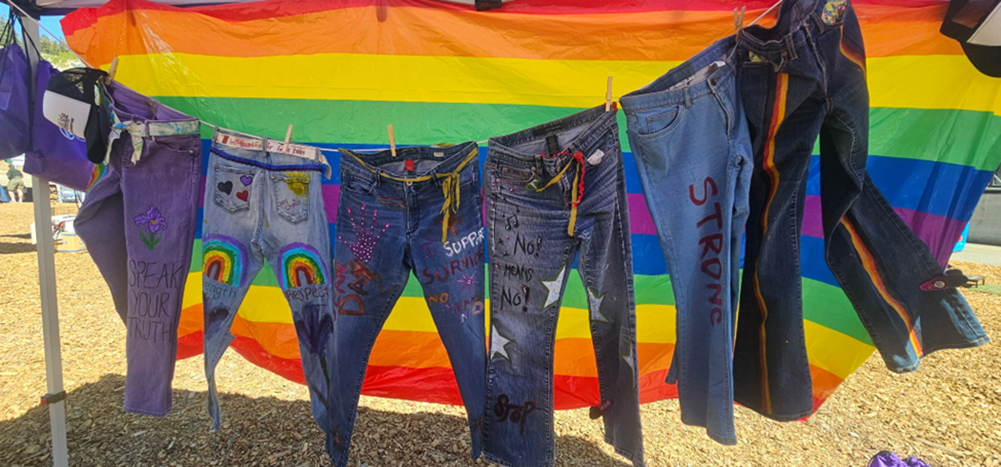
Thank you so much to Dominic for answering our questions!
Wild Iris’s 24/7 call-text crisis line is 1 (877) 873-7384.
They can also be reached through their offices in Bishop and Mammoth:
760-873-6601
150 N. Main St.
PO Box 697
Bishop, CA 93514
760-934-2491
625 Old Mammoth Road #201
Mammoth Lakes, CA 93546
Learn more at https://www.wild-iris.org/
—
Check out more “Spotlight On” here.
Discover more from Eastern Sierra Now | Local News
Subscribe to get the latest posts sent to your email.