A Data Center Does Not Have to Consume Groundwater for Cooling

A Data Center Does Not Have to Consume Groundwater for Cooling
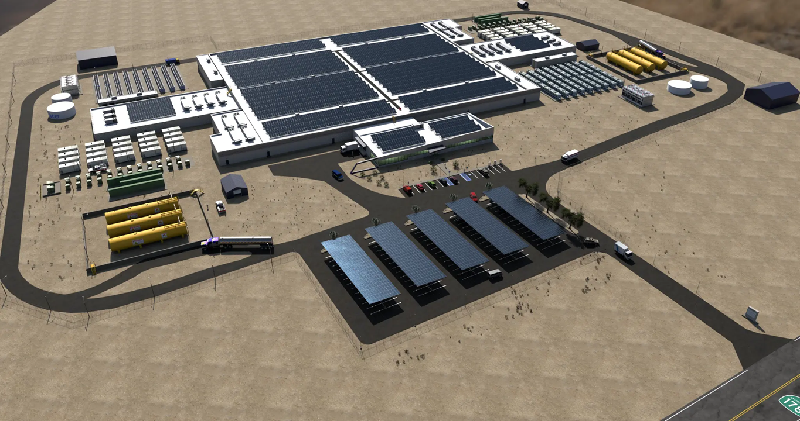
The clearest question is also the simplest: if modern data centers can operate without evaporating water for cooling, why should it draw from a critically overdrafted groundwater basin? The proposed RB Inyokern Data Center remains under review.
By Honey Badger | October 8, 2026
Data centers produce heat. That heat must be removed. But “liquid cooling” does not automatically mean constant water consumption.
In a closed-loop system, liquid carries heat away from computer chips, passes through a heat exchanger or chiller, and circulates back through the equipment. The liquid is reused rather than continuously evaporated. Alistair Speirs, Microsoft’s general manager for Azure Infrastructure, explained the distinction plainly: “Liquid cooling, by contrast, operates as a closed loop with no evaporation.”
Microsoft says the same cooling liquid may circulate for years before replacement.
Other low-water methods already exist. Air-cooled chillers and dry coolers work much like large radiators, releasing heat into the air. Outside-air economizers use cool nighttime or seasonal air when conditions allow. Hybrid systems can remain dry most of the year and use limited evaporative assistance only during extreme heat. Reclaimed or recycled water can also replace potable or native groundwater where some water use remains necessary.
These systems involve tradeoffs. Dry cooling may require more equipment, fan power or electricity during very hot weather. But that is a cost and design issue—not proof that groundwater consumption is unavoidable. Microsoft says its newer data-center design uses closed-loop, chip-level cooling and consumes zero water for operational cooling, with only a nominal increase in annual energy use compared with evaporative designs.
The Inyokern application itself supports the basic point. It identifies water-free chilled-water systems with a Water Usage Effectiveness rating of 0.0 liters per kilowatt-hour. Its proposed design already includes air-cooled chillers and an outside-air economizer. It also includes adiabatic towers, however, which use evaporation for part of the heat rejection.
According to the application, the project would use approximately 12 to 16 million gallons of water annually, including about 10 to 11 million gallons for cooling. The primary supply would come through the Inyokern Community Services District from the Indian Wells Valley Groundwater Basin.
The Indian Wells Valley Groundwater Authority says that basin is critically overdrafted, with reported annual extraction of approximately 21,000 acre-feet, compared with a state-approved sustainable yield of 7,650 acre-feet.
That establishes what the environmental discussions should review and compare.
The California Energy Commission should require a clear side-by-side analysis of a fully dry system, the proposed hybrid system, and a system using reclaimed water. Each option should disclose construction cost, annual electricity demand, peak-day water use, drought operations and enforceable water limits. Residents may submit comments while CEC docket 26-SPPE-01 remains open and the project remains under review.
Computers create heat. The issue is scarce groundwater does not need to be used to remove it. The available technology—and the project’s own application—prove this.
So, the bigger question is, “Why are they ignoring the better, alternative method that doesn’t deplete water, while in a drought?
Discover more from Eastern Sierra Now | Local News
Subscribe to get the latest posts sent to your email.